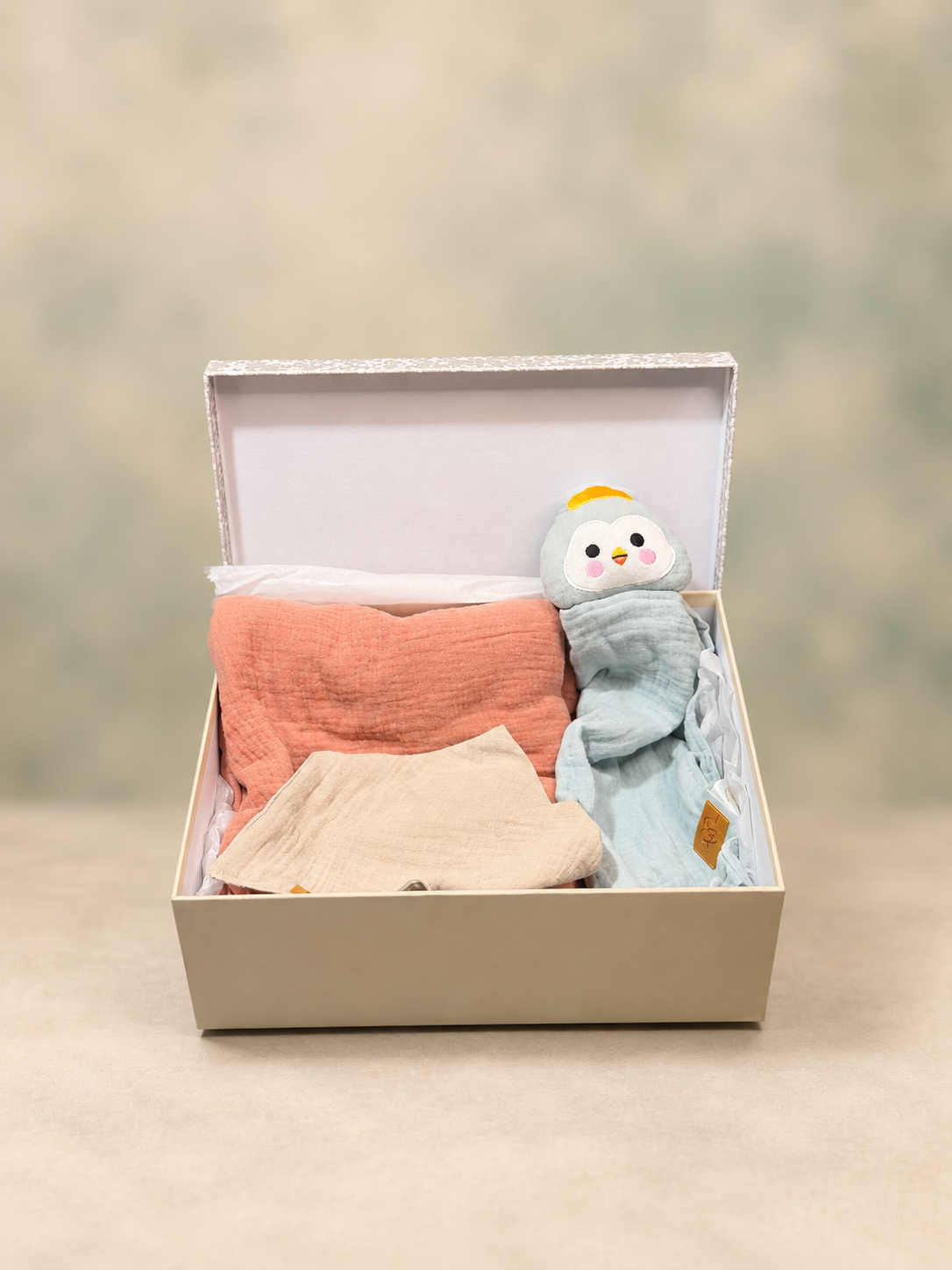
A newborn can change outfits several times in the same day. Between a spilled bottle, an overflowing diaper and an unexpected nap, baby clothes need above all to make parents' lives easier. Softness matters, of course, but the cut, the openings and the right size make all the difference when you need to dress a tiny, still fragile baby.
Choosing less, but better, helps you build a wardrobe that is truly useful. A few comfortable pieces that are easy to wash and suited to the season will carry you through the first days with far more peace of mind than a pile of pretty but impractical clothes.
The baby clothes essentials for the first months
A baby grows fast. So it is sensible not to stockpile too many newborn-size outfits, even if they are adorable. Some families will need them for a few weeks, others for barely a few days. Size 0-3 months often gives a longer-lasting margin, especially if baby is big at birth.
To start, favour pieces that are easy to mix and match: long- or short-sleeved bodysuits depending on the season, soft pyjamas, relaxed pants, light cardigans and hats suited to the weather. A simple outfit to put on is often the one that gets worn the most.
Here are the essentials that make days easier:
- bodysuits with a wrap-over or snap opening;
- pyjamas with a front opening, handy for diaper changes;
- pants with a soft waist that does not squeeze the tummy;
- one or two warm layers that are easy to stack;
- mittens or socks, depending on the season and actual need.
Fabric: soft for baby, practical for parents
A newborn's skin is thin and sensitive. Soft, breathable, supple fabrics are therefore a reassuring choice for everyday contact. Organic cotton is especially popular for bodysuits, pyjamas, muslins and light blankets: it is comfortable, easy to care for and well suited to the many hours baby spends sleeping, feeding and being carried.
A beautiful fabric should not only feel nice at first touch. Also look at the thickness of the fabric, the flexibility of the seams and how well it keeps its shape after several washes. Very stiff clothes can get in the way of natural movement, while a fabric that is too thin may be less durable or less suitable on cold days.
Finishing touches deserve the same attention. Scratchy tags, a badly placed closure or buttons that are hard to handle quickly become irritating, especially during night changes. Sturdy snaps, stretchy necklines and well-placed openings are small details that bring real comfort day to day.
Watch out for layers and extra bulk
Dressing baby warmly does not mean bundling them up. In Montréal and elsewhere in Québec, the weather calls for thinking in layers rather than very thick outfits. A bodysuit close to the body, a pyjama or soft pants, then an extra layer if needed, make it easy to adjust the temperature.
Indoors, breathable fibres are generally more comfortable than an overly warm one-piece. Outdoors, a windproof layer or a cover designed for the car seat can help protect baby while travelling. In a car seat, however, avoid very padded clothing under the harness: the harness must stay snug against the child's body.
Choosing the right size without overbuying
Baby sizes vary from one brand to another. The number on the label gives a reference point, but it does not replace looking at the cut. Some pyjamas are long and narrow, others roomier through the tummy or legs. If baby is between two sizes, the larger size can be more comfortable, as long as the cuffs and neckline still fit snugly.
Something too small sometimes leaves marks on the skin or makes diaper changes more complicated. Something clearly too big can ride up, twist or get in the way of movement. Look for a balance: enough room to move, enough support for baby to stay comfortable.
Clothes that grow with baby can be useful when they have fold-over cuffs, a stretchy waist or a slightly longer cut. They do not replace all the basics, but they reduce the need to renew the wardrobe with every growth spurt.
Clothing for sleep and special care
For sleep, comfortable pyjamas and a sleep sack suited to the room temperature remain a simple and reassuring solution. A sleep sack should be chosen according to the size and weight indicated by the manufacturer so that baby cannot slip down inside. Loose blankets are not recommended in an infant's sleep space.
Some families also need clothing that makes care, appointments or access to a medical device easier. In those situations, comfort goes beyond the softness of a fabric. Openings designed for care, pleasant organic fabrics and models that are simple to handle can ease a moment that is already demanding.
The adaptive products, such as a sleep sack designed for children with complex care needs, must fit the real routine of the child and their family. Size, type of access, ease of washing and the care team's recommendation are all useful criteria. There is no universal solution: the right product is the one that protects the child's comfort while supporting the everyday actions of their loved ones.
Giving baby clothes that will really get used
A newborn gift is even more appreciated when it takes something off the new parents' list. Ready-to-give sets, made up of soft clothing and little essentials, suit a visit to meet baby just as well as a gift from a colleague or a group. A thoughtful presentation matters, but usefulness remains the loveliest gesture.
To lower the risk of getting it wrong, choose sizes 3-6 months or 6-9 months, especially if the parents have already received several newborn outfits. A set of pyjamas, bodysuits and practical textiles such as muslins or washcloths stays with the family well beyond the first birth photos.
At A&Y, the collections designed for everyday life bring together this search for softness, function and care. Purchases of A&Y products also support the Fondation CHU Sainte-Justine, with 10% of sales, so that the gift given to one family can also contribute to pediatric care.
Washing and caring for baby clothes
Before first use, wash new clothes to remove manufacturing residues and soften them. A gentle detergent, without a strong scent when possible, is often better for sensitive skin. Follow the care instructions, especially for organic cotton garments, delicate textiles or adaptive items.
Stains are part of life with a baby. Treating them quickly helps, but there is no need to chase an unrealistic perfection. A well-loved pyjama, washed often and a little marked by the first months, has done its job: keeping baby comfortable while the family finds its footing.
When packing a first bag or choosing a gift, pick clothes that invite cuddles, stand up to busy days and go on without complicating anything. Those are the quiet details that bring the most softness to the early days with baby.
Every family has a story. Let’s keep making everyday life a little gentler.
Keep reading